Novel Anti-CD3 Heavy Chain-Only Antibodies for Use in T Cell-Engaging Therapeutics
Llama-derived CD3 VHHs enable simpler, modular T-cell engager design with strong functional activity

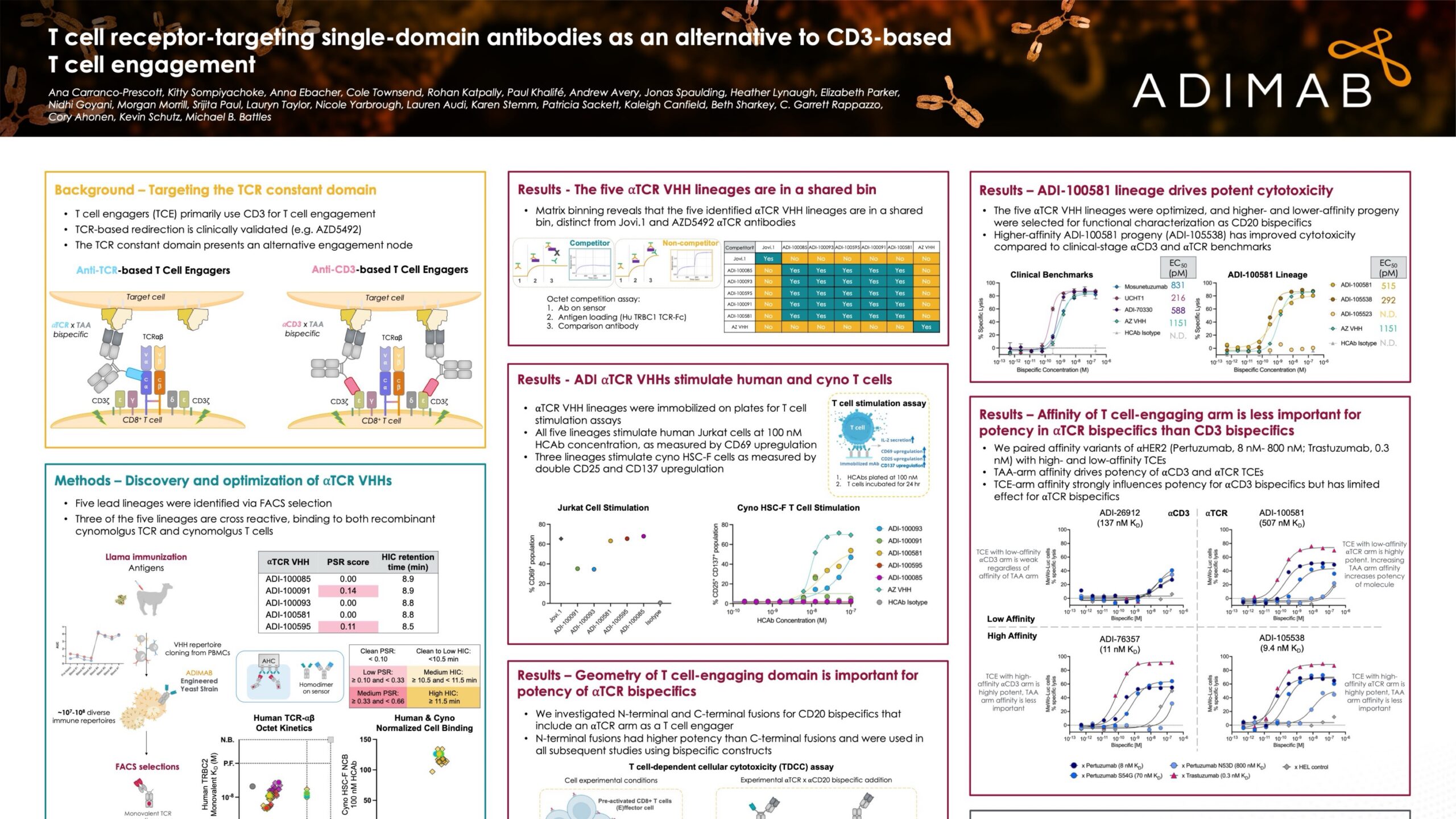
T cell engagers (TCEs) are an increasingly validated class of multispecific antibodies. By pairing one arm targeting CD3 with another arm targeting a tumor-associated antigen, TCEs force a T cell and tumor cell into close proximity, triggering T cell activation and tumor cell killing. There are currently eight FDA-approved TCEs, with six of these having been approved since 2022. Adimab's existing anti-CD3 IgG/Fab/scFv panel spans a wide affinity range with human–cynomolgus cross-reactivity, and bispecific CD3 × HER2 TCEs generated with this panel have demonstrated cytotoxicity in cell-based assays. To further expand this CD3 binder offering and reduce the manufacturing complexity of TCEs, Adimab scientists developed a panel of anti-CD3 heavy chain-only antibodies (HCAbs), sometimes called VHHs or nanobodies, discovered from llama immune libraries using our yeast-based platform.
Approach and outcomes
Why it matters
Adimab's anti-CD3 VHHs offer a simplified manufacturing path for TCE development while delivering functional activity comparable to clinically validated benchmarks across multiple bispecific formats. CD3 VHHs are accessible as part of Adimab's non-exclusive TCE offering.