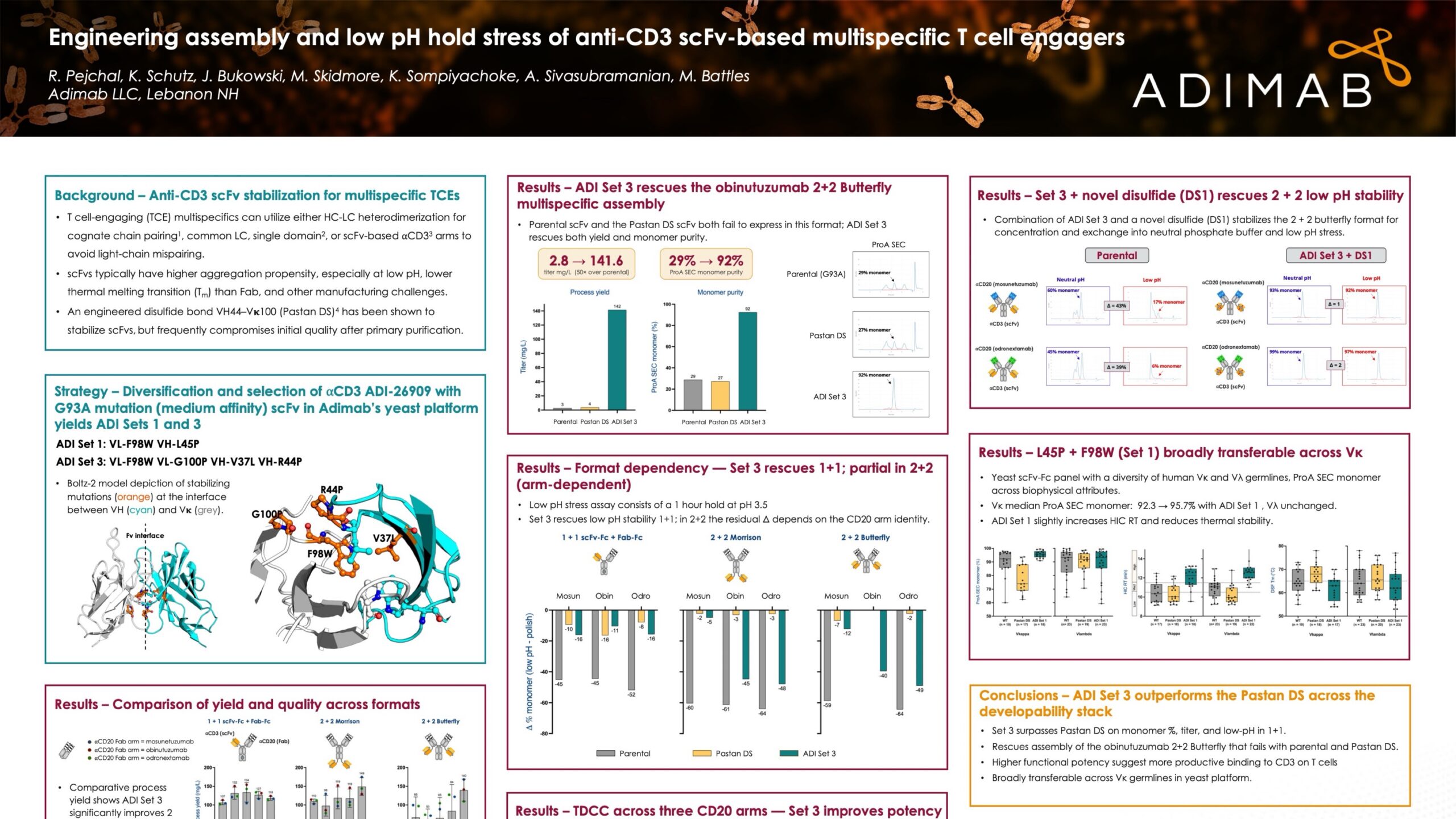
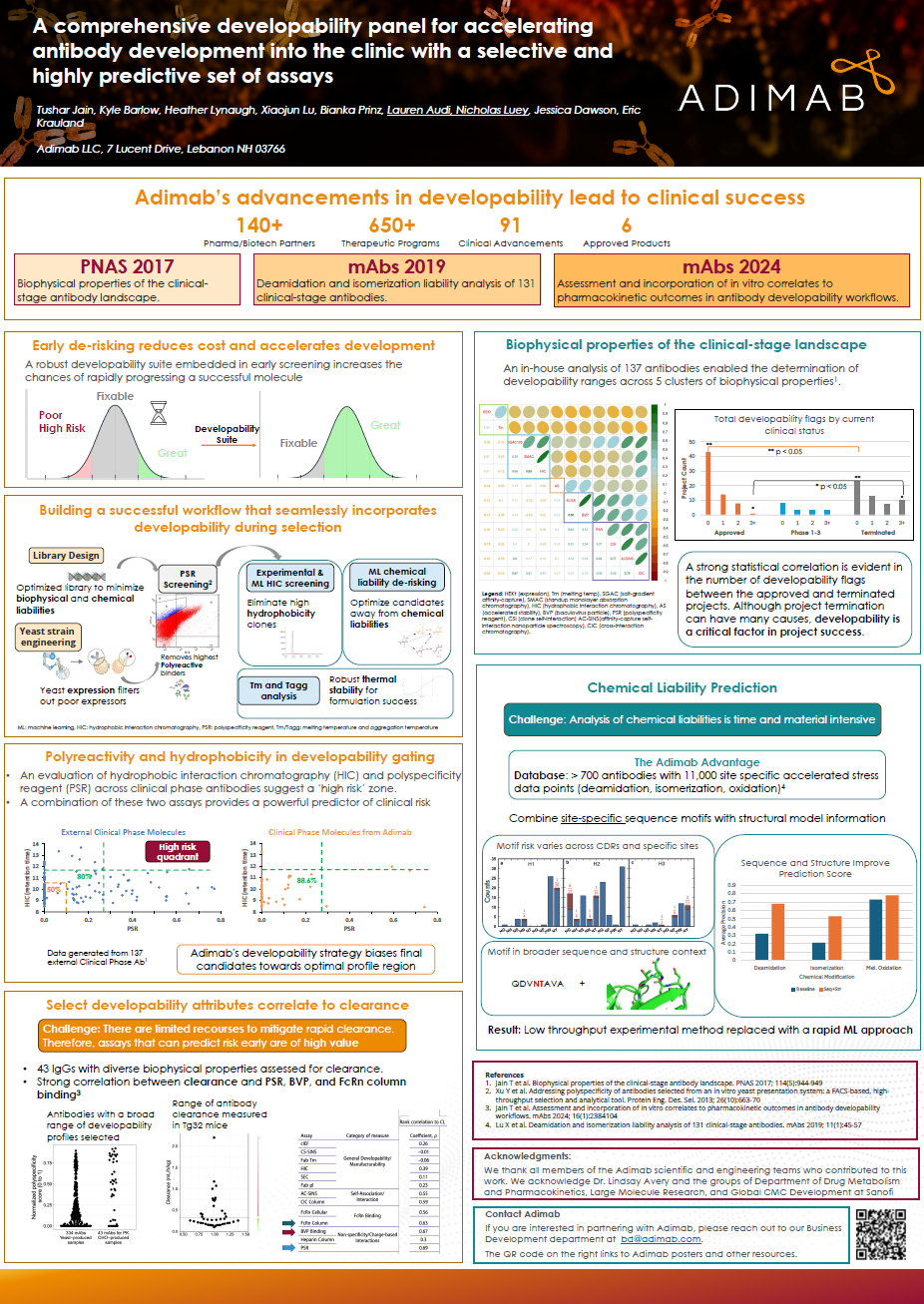
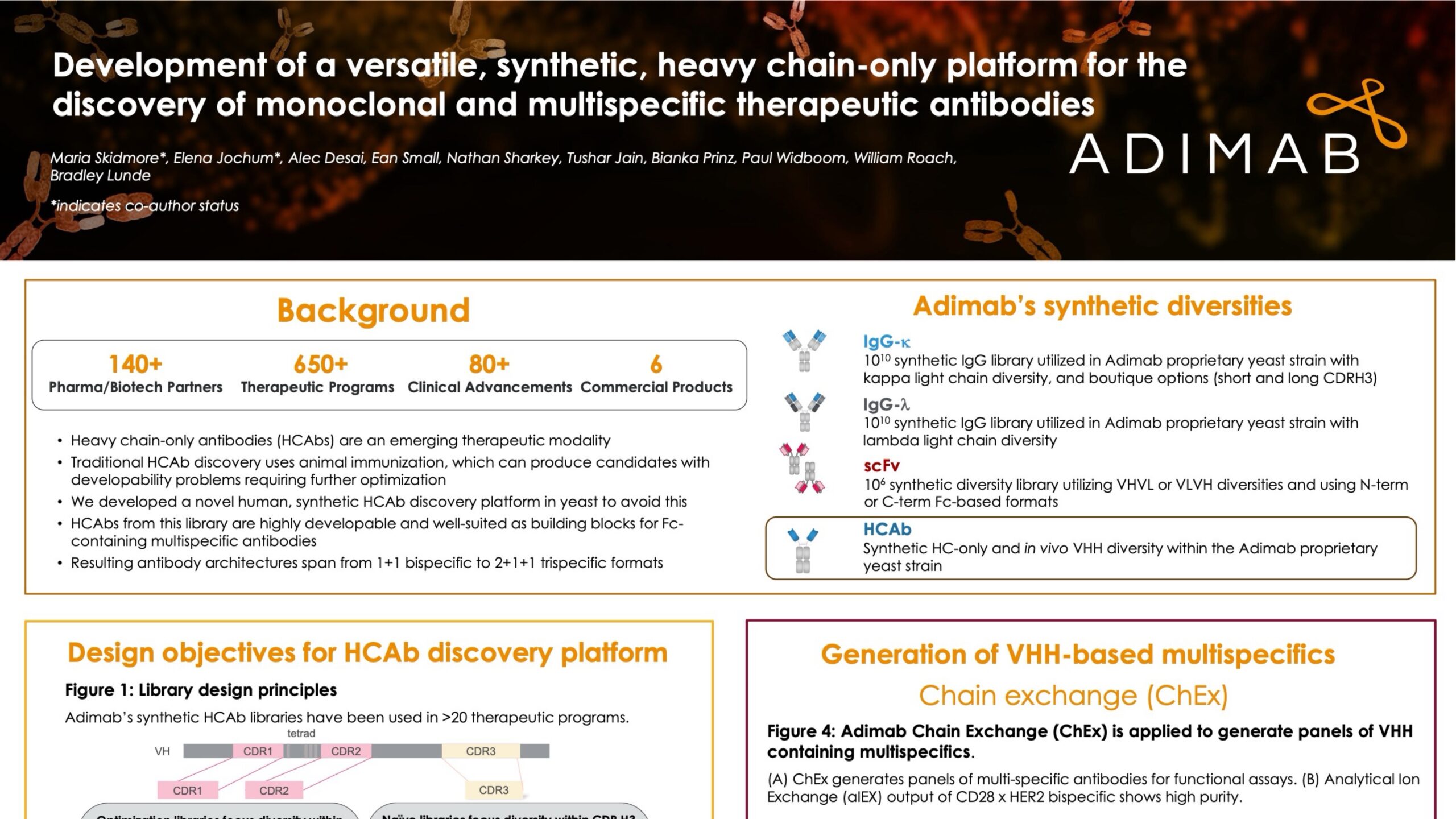
CD3-targeting bispecific T cell engagers (TCEs) are clinically validated but their potency can be difficult to modulate. The T cell receptor (TCR) constant domain, a conserved structural region shared across αβ T cells, presents a compelling alternative engagement node. Adimab scientists investigated whether single-domain antibodies (VHHs) targeting this region could serve as an orthogonal and broadly applicable platform for T cell redirection.
Approach and outcomes
- Llama immunization and yeast-based discovery identified five αTCR VHH lineages via FACS selection. Three of these demonstrated cross-reactivity with cynomolgus TCR in both biochemical and cell-based assays, supporting translational relevance.
- Epitope binning showed that all five lineages occupied a shared, distinct epitope bin, separate from benchmark antibodies such as Jovi.1 and AZ VHH.
- Bispecific TCEs incorporating αTCR VHHs mediated potent cytotoxicity comparable to CD3-based formats, with strong activity observed across multiple lineages and benchmarks.
- Unlike CD3-based TCEs, where CD3 affinity strongly influenced potency, αTCR-based TCEs retained efficacy even with lower-affinity TCR arms, with potency more dependent on the tumor antigen (TAA) arm.
- Molecular format and binding properties influenced activity. N-terminal bispecific formats showed higher potency than C-terminal formats, and TAA-arm affinity drove potency, while TCR-arm affinity had a more limited effect compared with CD3-based TCEs.
- Developability profiling showed favorable biophysical profiles for all five leads, with low polyspecificity (PSR) and good hydrophobicity (HIC) retention times supporting their manufacturability.
Why it matters
These findings establish TCR constant domain targeting as a viable and tunable alternative to CD3-based engagement. The ability to maintain potency while decoupling affinity from the TCR-targeting arm expands the design space for TCEs and supports generation of bi- and multispecifics with a broad therapeutic window.
View poster